
Being unemployed can be challenging, particularly when you have professional experience but struggle to find opportunities that match your skills. Whether you have recently lost your job, been out of work for several months or taken time away from your career, returning to employment can require more than simply submitting applications.
Many professionals spend hours searching job boards, updating their CVs and applying for vacancies without receiving meaningful responses. Over time, repeated rejections can affect confidence and make it difficult to decide what to do next.
However, unemployment does not mean that your professional experience has lost its value. With a clear strategy, you can identify suitable employers, communicate your strengths and approach the job market more effectively.
This is where reverse recruitment for unemployed professionals can help. Instead of managing every part of the job search independently, candidates can receive structured support with career planning, CV optimisation, employer research, applications and interview preparation.
In this guide, we explore how reverse recruitment works and how unemployed professionals can use a more organised approach to move towards their next career opportunity.
What Is Reverse Recruitment for Unemployed Professionals?
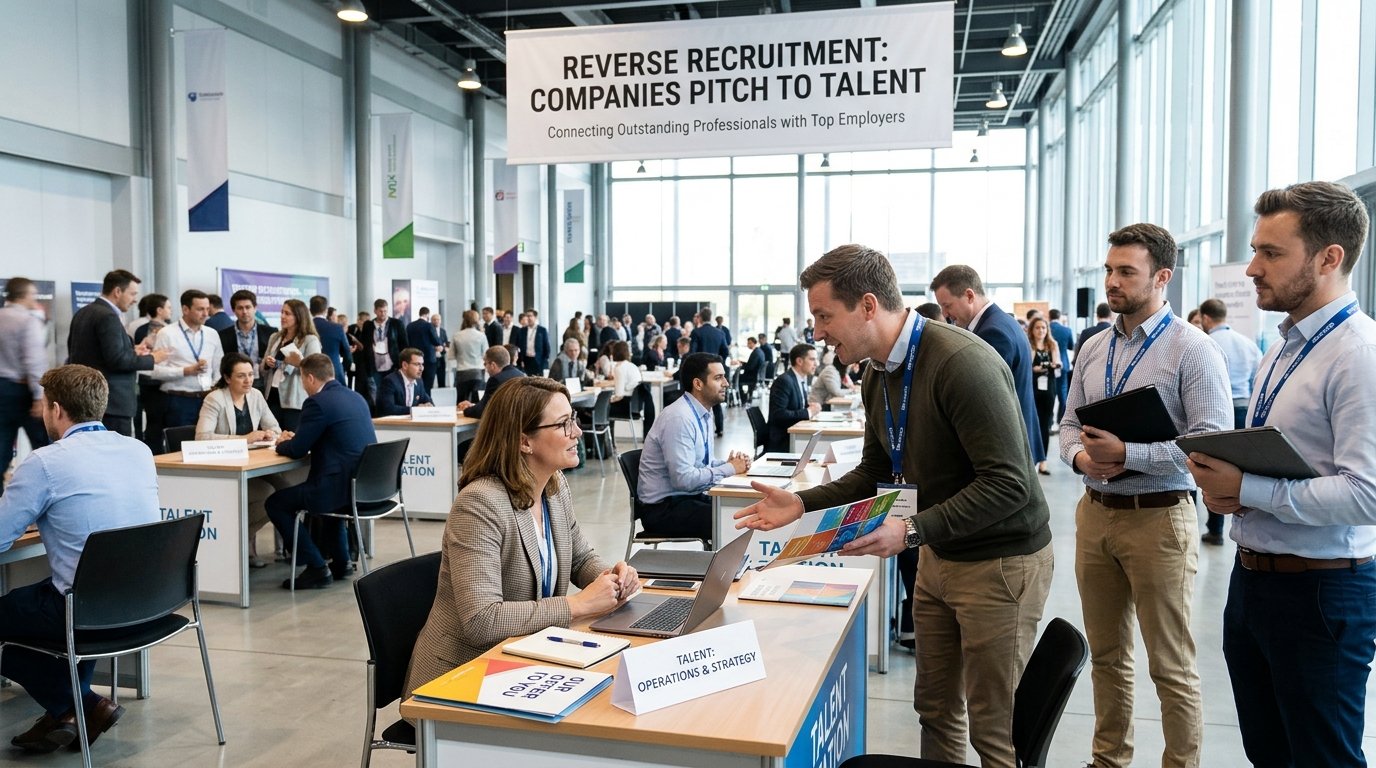
Reverse recruitment is a candidate-focused approach to job searching. Rather than relying entirely on traditional recruitment processes, where employers advertise vacancies and candidates apply independently, professionals receive support throughout their search for employment.
For unemployed professionals, this approach can provide assistance with:
- Reviewing existing experience, qualifications and career objectives.
- Identifying suitable industries, employers and job opportunities.
- Improving CVs and LinkedIn profiles.
- Preparing relevant and targeted applications.
- Researching potential employers.
- Supporting professional outreach.
- Preparing for interviews and evaluating job offers.
The aim is to create a structured job search that focuses on suitable opportunities rather than the number of applications submitted.
You can learn more about the process in our guide to what reverse recruitment is and how it works.
Why Finding a Job After Unemployment Can Be Difficult
Returning to employment can involve several challenges. Understanding these difficulties is the first step towards addressing them.
Employment Gaps Can Raise Questions
Recruiters may notice periods of unemployment in a candidate’s CV and ask about them during the recruitment process.
An employment gap does not automatically make someone unsuitable. However, candidates should be prepared to explain the period clearly and confidently.
For example, someone who spent several months searching for employment, completing professional training or managing personal responsibilities can explain this honestly without providing unnecessary personal details.
Repeated Applications Can Reduce Motivation
Submitting applications without receiving feedback can become frustrating. Some candidates respond by applying for almost every available vacancy, even when the role does not match their experience.
This approach can lead to generic applications and make it harder to maintain a consistent job search.
Professional Confidence May Decline
After an extended period without employment, candidates may begin to question their abilities or professional value.
Preparing for interviews, explaining achievements and discussing salary expectations can become more difficult when confidence has been affected by repeated rejections.
Skills May Need Updating
Some industries change quickly. New software, technologies, qualifications and working practices can influence what employers expect from candidates.
Professionals returning to the market may need to refresh their skills or demonstrate how their existing experience remains relevant.
How Reverse Recruitment Changes the Traditional Job Search
Traditional job searching often places most of the responsibility on candidates. They search for vacancies, prepare applications, contact employers and manage interviews independently.
Reverse recruitment introduces a more organised, candidate-focused process.
A Clearer Career Strategy
The process begins with understanding the candidate’s professional background, preferred roles and career objectives.
This helps establish which opportunities are worth pursuing and which may not be suitable.
For example, an unemployed project manager with experience in technology implementations may benefit from targeting project management and programme delivery roles rather than applying to unrelated administrative positions.
More Focused Employer Research
Instead of relying exclusively on advertised vacancies, candidates can research organisations that may need their skills.
This can include reviewing company websites, career pages, industry developments and professional networks to identify potential opportunities.
Better Application Preparation
A CV and cover letter should reflect the requirements of each relevant position.
Candidate-focused support can help ensure that professional achievements, skills and experience are communicated clearly.
Consistent Job Search Management
A structured approach makes it easier to track applications, follow up with employers and identify areas that need improvement.
It also helps candidates avoid spending unnecessary time on unsuitable vacancies.
Identifying the Right Roles After Losing a Job
One of the most important decisions after unemployment is determining which roles to pursue.
Some professionals immediately look for the same job title they previously held. Others use the opportunity to consider a different industry, level of responsibility or working arrangement.
Before applying, review the following areas.
Assess Your Previous Experience
Identify the responsibilities, projects and achievements that demonstrate your professional strengths.
Consider which skills you used regularly and which results you delivered.
Identify Transferable Skills
Many skills are useful across different industries.
For example, communication, project management, problem-solving, data analysis and client relationship management can be relevant to several professional roles.
A marketing professional moving into business development may already have valuable experience in customer research, campaign planning and communication.
Define Your Employment Priorities
Consider what matters most in your next position.
This could include salary expectations, working hours, location, remote working, career progression or opportunities to develop specialist skills.
Having clear priorities makes it easier to assess whether an opportunity is worth pursuing.
Explaining Employment Gaps in Your CV
An employment gap should not prevent you from applying for suitable positions. The important thing is to present your professional history accurately and explain any relevant periods when asked.
Be Honest About the Gap
Never invent employment dates, job titles or professional experience to hide unemployment.
Inaccurate information can damage your credibility and create problems during background checks.
Highlight Relevant Activities
If you completed training, earned certifications, worked on personal projects or developed new skills during the gap, include relevant information.
For example:
Professional Development | January 2026 – April 2026
- Completed training in advanced data analysis.
- Developed practical knowledge of reporting tools.
- Worked on independent projects to strengthen analytical skills.
Only include activities you genuinely completed.
Focus on Your Value
Your CV should give employers a clear picture of what you can contribute.
Avoid allowing an employment gap to dominate the document. Present your experience, achievements and relevant skills prominently.
Updating Your LinkedIn Profile After Unemployment
LinkedIn can help professionals reconnect with their industry, build relationships and become visible to recruiters.
An outdated profile may not communicate your current skills or career objectives effectively.
Improve Your Headline
Your headline should describe your professional expertise and the type of work you can offer.
For example:
Digital Marketing Specialist | SEO Strategy | Content Marketing | Organic Growth
This is more informative than simply writing “Looking for a Job”.
Rewrite Your About Section
Use your About section to explain your professional background, specialist skills and achievements.
Keep the content clear and relevant to the positions you want to pursue.
Update Your Experience
Make sure your previous job descriptions explain your responsibilities and contributions.
Where possible, include measurable results that demonstrate your impact.
Reconnect With Your Professional Network
Reach out to former colleagues, managers and industry contacts. Personalised messages can help restart professional conversations and uncover opportunities that may not be advertised publicly.
Building Confidence Before Job Interviews
Interview confidence can decline after a period of unemployment, particularly when candidates have experienced repeated rejections.
Preparation can make the process more manageable.
Practise Explaining Your Career History
Prepare a clear explanation of your previous roles, achievements and employment gap.
Keep your response professional, honest and focused on your readiness for the next opportunity.
Prepare Examples of Your Achievements
Think about projects you completed, problems you solved and improvements you delivered.
Use specific examples rather than relying on general statements about your abilities.
Research the Employer
Understand the company’s services, customers, industry and current priorities.
This allows you to connect your experience with the organisation’s needs.
Prepare Questions
Ask about responsibilities, team structure, performance expectations and opportunities for development.
An interview is also your opportunity to decide whether the employer and position are right for you.
How Targeted Employer Outreach Can Improve Your Job Search
Not every suitable position is advertised on a public job board. Some organisations may be considering new hires, building teams or looking for specialist skills before publishing a vacancy.
Professional outreach can help candidates introduce themselves to relevant organisations.
Research Before Making Contact
Identify companies that operate in your industry and have roles aligned with your experience.
Review their websites, services, leadership teams and recruitment information before contacting them.
Contact the Right People
Depending on the organisation, relevant contacts may include hiring managers, department heads, internal recruiters or talent acquisition professionals.
Avoid sending the same generic message to every contact.
Write a Clear Introduction
Explain your professional background, relevant expertise and the reason for contacting the organisation.
Keep the message concise and respectful.
Follow Up Professionally
If you do not receive a response, a polite follow-up may be appropriate after a reasonable period.
Avoid sending repeated messages that could damage your professional impression.
Common Mistakes Unemployed Job Seekers Should Avoid
A few common mistakes can make an already difficult job search less effective.
Applying for Every Available Vacancy
A large application count does not necessarily produce better results. Focus on roles that match your skills, experience and career objectives.
Using the Same CV for Every Application
A generic CV may fail to communicate why you are suitable for a particular position.
Make relevant adjustments to your professional summary, skills and achievements for each application.
Ignoring Professional Development
If your industry has changed, identify the skills or knowledge you need to refresh.
Short courses, certifications and practical projects can help demonstrate continued professional development.
Neglecting Your Professional Network
Do not rely entirely on job boards. Reconnecting with former colleagues and relevant industry contacts can help you discover opportunities and receive useful advice.
Accepting an Unsuitable Offer Too Quickly
Financial pressure can make an immediate job offer feel difficult to refuse. However, candidates should still review responsibilities, salary, working conditions and contract terms before accepting.
How to Choose the Right Reverse Recruitment Service
Choosing a suitable reverse recruitment provider is an important part of the process.
Before committing to a service, consider the following factors.
Understand the Services Provided
Check whether the provider offers career planning, CV optimisation, LinkedIn profile improvements, employer research, application support and interview preparation.
Look for a Transparent Process
A professional provider should explain what is included, how the process works, what the candidate is expected to do and what fees apply.
Check Industry Understanding
A service that understands your industry and target roles may be better positioned to help you identify relevant opportunities.
Avoid Unrealistic Promises
No recruitment service can guarantee that an employer will hire you. Be cautious of claims promising guaranteed interviews, employment or a specific salary.
The right service should offer practical support and realistic expectations.
You can explore RecruitingSimple’s reverse recruitment service to understand how its candidate-focused approach can support your job search.
FAQs About Reverse Recruitment for Unemployed Professionals
1. Can reverse recruitment help unemployed professionals find a job?
Reverse recruitment can help unemployed professionals organise their job search, identify relevant employers, improve applications and prepare for interviews. Employment outcomes still depend on the candidate’s suitability and employer decisions.
2. Is it possible to get hired after a long employment gap?
Yes. Many professionals return to employment after extended gaps. Employers may consider relevant experience, skills, qualifications and the candidate’s ability to meet the requirements of the role.
3. Should I mention unemployment in my CV?
You should present your employment dates accurately. You do not usually need to label yourself as unemployed. If an employment gap is relevant, prepare an honest and concise explanation for recruiters.
4. How can I explain an employment gap during an interview?
Explain the gap honestly and professionally. If you completed training, developed skills or managed personal responsibilities, mention relevant information where appropriate. Then bring the conversation back to your experience and suitability for the position.
5. Can reverse recruitment help me change careers while unemployed?
Yes. A structured job search can help you identify transferable skills and explore roles in a different industry. You may also need additional training or experience depending on your target career.
6. How is reverse recruitment different from traditional recruitment?
Traditional recruitment generally focuses on employers filling vacancies. Reverse recruitment is candidate-focused and supports professionals with identifying opportunities, improving applications and managing their job search.
7. Does reverse recruitment guarantee employment?
No. Reverse recruitment can provide guidance and practical job search support, but it cannot guarantee an interview, job offer or employment outcome.
Conclusion
Unemployment can create uncertainty, but it does not define your professional future. Your previous experience, transferable skills and professional achievements remain valuable when presented effectively.
The key is to move away from an unstructured job search and focus on opportunities that match your background and career objectives.
Reverse recruitment for unemployed professionals offers a more organised way to approach this process. From improving your CV and LinkedIn profile to researching employers and preparing for interviews, the right support can help you take practical steps towards your next role.
If you are ready to restart your job search, explore RecruitingSimple’s reverse recruitment services and learn how a structured approach can help you move forward with greater confidence.