
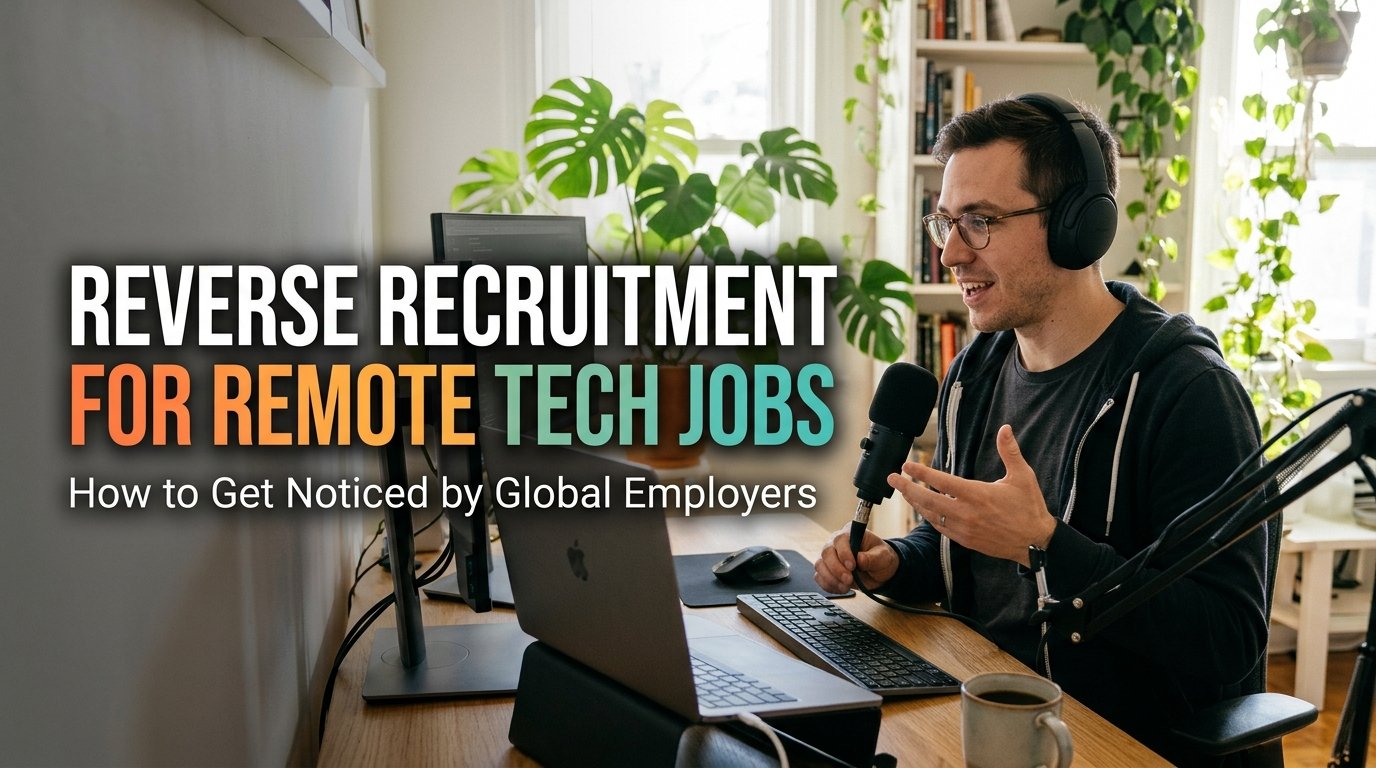
Working in technology has made it possible to build a career with companies far beyond your own city or country. A software engineer can contribute to a US startup from Europe, a data specialist can support a distributed team from Asia, and a product professional can work with colleagues across several time zones. The opportunities are real, but reaching the right employers is not always straightforward.
Remote vacancies attract applicants from many locations. Employers may receive applications from professionals with similar technical skills, while candidates must also demonstrate that they can communicate clearly, work independently and collaborate across borders. A strong CV alone may not explain all of this.
Reverse recruitment for remote tech jobs offers a more organised way to approach the global market. Rather than applying to every remote vacancy you find, a reverse recruiter can help define suitable markets, position your experience for international employers and manage targeted applications and outreach.
Why Finding a Global Remote Role Requires a Different Strategy
A remote role is not automatically open to candidates everywhere. Some employers hire only in countries where they have a legal entity or payroll arrangement. Others use contractors or employer-of-record partners, while some specify a limited list of eligible locations.
This means that a vacancy labelled remote may still have location restrictions. Candidates can waste time applying for roles they are not eligible to take, or overlook opportunities because the job title and location filters do not match their search.
A practical global job search considers more than the word remote. It looks at hiring location, employment type, working hours, communication expectations, compensation structure and the technical requirements of the role.
What Reverse Recruitment Can Do for Remote Tech Candidates
Reverse recruitment is a candidate-focused service in which a professional team supports the job search on your behalf. Depending on the provider and agreed package, this may include career positioning, CV and LinkedIn improvements, vacancy research, applications, employer outreach, interview preparation and offer support.
For remote candidates, the value comes from combining these activities into one consistent strategy. The process should help you focus on employers that can realistically hire you and roles where your experience matches the work.
1. Define the Countries and Markets You Can Target
Start by deciding where you can legally and practically work. Consider your current country of residence, work authorisation, preferred employment arrangement and willingness to work as an employee or contractor. Do not assume that every international employer can hire in your location.
Next, identify markets that make sense for your experience. A senior cloud engineer may target companies with distributed infrastructure teams, while a product designer may focus on SaaS businesses that already operate remotely. A focused market list makes research more useful and helps avoid irrelevant applications.
A reverse recruiter should clarify these preferences before beginning outreach. You should also agree on whether the search can include contract, permanent, freelance or fixed-term positions.
2. Present Your Remote-Work Readiness with Evidence
Employers want to know that a remote team member can deliver without constant supervision. Simply writing ‘good communication’ or ‘self-motivated’ on a CV does not provide much evidence.
Use examples that show how you have worked independently and collaborated with people in different locations. You might mention leading sprint reviews across time zones, documenting technical decisions, managing asynchronous handovers or delivering a project with a distributed team.
If you have not worked remotely before, focus on related evidence. Experience coordinating stakeholders across offices, managing your own workload or using collaboration tools can help demonstrate readiness, provided the examples are accurate.
3. Make Your Technical Experience Easy to Evaluate
International employers may not be familiar with every local company or job title on your CV. Make your responsibilities and achievements understandable without relying on internal terminology.
For technical roles, describe the systems you worked with, the scale or complexity of the work and the contribution you made. Where appropriate, include a portfolio, GitHub profile, case study or project summary. Explain your individual role rather than presenting a team result as your personal achievement.
Your CV and LinkedIn profile should support the same professional direction. Recruiting Simple’s reverse recruitment service describes support with resume and LinkedIn optimisation, targeted job search and direct employer outreach. You can review the Reverse Recruitment Services page for details.
4. Treat Time-Zone Compatibility as Part of the Job Match
Time-zone overlap can affect whether a remote position is suitable. Some teams work asynchronously and need only a few shared hours each week. Others expect candidates to attend daily meetings during the employer’s business hours.
Before applying, check the expected working schedule and ask whether flexibility is available. Be realistic about regular late-night or early-morning meetings. A role may offer an attractive salary but become difficult to sustain if the schedule conflicts with your responsibilities or preferred working pattern.
A good job-search strategy records time-zone expectations alongside salary, location eligibility and technical requirements. This makes it easier to compare opportunities properly.
5. Understand Compensation and Employment Arrangements
International remote roles may advertise compensation in a currency different from the one you use locally. The figure alone does not tell you the full value of an offer.
Check whether the advertised amount is an annual salary, hourly rate or contract budget. Clarify whether the arrangement includes paid leave, health benefits, pension contributions, equipment, tax withholding or other provisions. Contractors may be responsible for costs that an employee would not normally pay directly.
Do not compare two offers only by converting their headline figures into one currency. Consider payment frequency, fees, tax responsibilities, benefits and the stability of the arrangement. For advice on personal tax or legal obligations, consult a qualified professional in the relevant jurisdiction.
6. Use Targeted Applications and Direct Outreach
A large number of applications does not necessarily create a stronger remote job search. Applying to roles that cannot hire in your location or require experience you do not have can consume time without improving your prospects.
A targeted process starts with a clear set of role criteria. Each application should reflect the actual vacancy, highlight relevant technical evidence and address any important location or working-hour requirements. Direct outreach can add context when your experience is a strong match but your profile needs a little explanation.
A reverse recruitment team may help research suitable employers, prepare applications, contact hiring teams and track responses. Agree on the target roles and approve the approach before applications or messages are sent.
7. Prepare for Remote Interviews and Technical Assessments
Remote interviews test more than technical knowledge. Employers may also look at how you explain decisions, ask questions, share progress and collaborate through video calls or written communication.
Prepare examples that demonstrate how you solve problems, handle feedback and communicate when a project is blocked. For technical interviews, practise explaining your reasoning rather than focusing only on the final answer. If an assessment is part of the process, clarify its expected scope and time commitment.
Also prepare a few practical questions for the employer: How does the team document decisions? Which hours require overlap? How are priorities agreed? What does success look like in the first three months? These questions help you assess the working environment as well as the role.
How to Judge Whether a Remote Opportunity Is Worth Pursuing
Before spending time on an application, review the opportunity against a consistent checklist:
- Location eligibility: does the employer hire in your country or accept your proposed work arrangement?
- Role fit: do your skills and experience match the essential responsibilities?
- Time-zone expectations: can you meet the required overlap without an unsustainable schedule?
- Employment terms: are the contract type, compensation and benefits clear?
- Team practices: does the company explain how remote employees communicate and receive support?
- Career value: does the position offer meaningful work, development or progression that fits your goals?
If key details are missing, ask for clarification before progressing. A professional hiring process should make the basic terms understandable.
Questions to Ask a Reverse Recruitment Provider
Before choosing a service, make sure you understand what the team will do and what decisions remain yours. Useful questions include:
- Which countries and employment arrangements can you target for my profile?
- How do you check whether an employer can hire someone based in my location?
- Will I approve the target companies and roles before applications are submitted?
- How will you tailor my CV and outreach for different markets?
- How often will I receive progress updates and application records?
- What interview preparation and offer support are included?
- How do you protect my personal information and handle confidential job searches?
Be cautious of guaranteed job offers, unclear application practices or providers that will not share where they are sending your information. No recruiter can control an employer’s final decision. A reliable service should explain its process, fees, limitations and responsibilities clearly.
Is Reverse Recruitment Right for Every Remote Job Seeker?
Not always. If you are still building the technical skills required for your target role, training and practical projects may be a better first step. If you already have a clear target and relevant experience but struggle to identify suitable employers or manage applications consistently, reverse recruitment may be worth considering.
It can be particularly useful for experienced software engineers, cloud and DevOps specialists, data professionals, product managers and other technology candidates seeking opportunities beyond their local market. The service should be tailored to your actual goals rather than sending the same applications to every remote vacancy.
Build a Global Job Search Around the Right Opportunities
A successful international remote search is not simply about finding more vacancies. It is about identifying employers that can hire you, presenting your experience in a way they understand and showing that you can contribute to a distributed team.
Reverse recruitment can bring structure to that work through targeted research, profile positioning, applications and employer communication. If you are exploring your next remote technology role, visit Recruiting Simple’s reverse recruitment service and learn more about the team through its About Us page.
Frequently Asked Questions
Can reverse recruitment help me find remote jobs in another country?
A reverse recruitment service can research international employers and roles that match your preferences. However, the employer must be able to hire in your location or agree to a suitable employment arrangement. Always confirm eligibility before applying.
Do remote tech jobs require previous remote-work experience?
Not every employer requires it. If you have not held a remote position, demonstrate related skills such as independent delivery, clear documentation, stakeholder communication and effective use of collaboration tools.
Should I include my time-zone availability on my CV?
You can include your location and relevant working-hour availability where it helps clarify your suitability. Keep the information concise and accurate, and discuss detailed schedule expectations during the hiring process.
Can a reverse recruiter negotiate an international job offer?
Some providers offer negotiation support, but the scope varies. Confirm whether they advise you, communicate with the employer on your behalf or provide guidance only. Review all contract terms before accepting.
Are international remote roles always paid more?
No. Compensation varies by employer, role, location, seniority and employment arrangement. Compare the complete package, including benefits, taxes, fees and working expectations, rather than assuming a global role will pay more.