
A developer resigns just as a product release is approaching. A new client signs a contract, and suddenly the team needs another engineer. Or your roadmap changes and you realise the skills you have today will not be enough three months from now. In each situation, the pressure is familiar: you need good people, and you need them quickly.
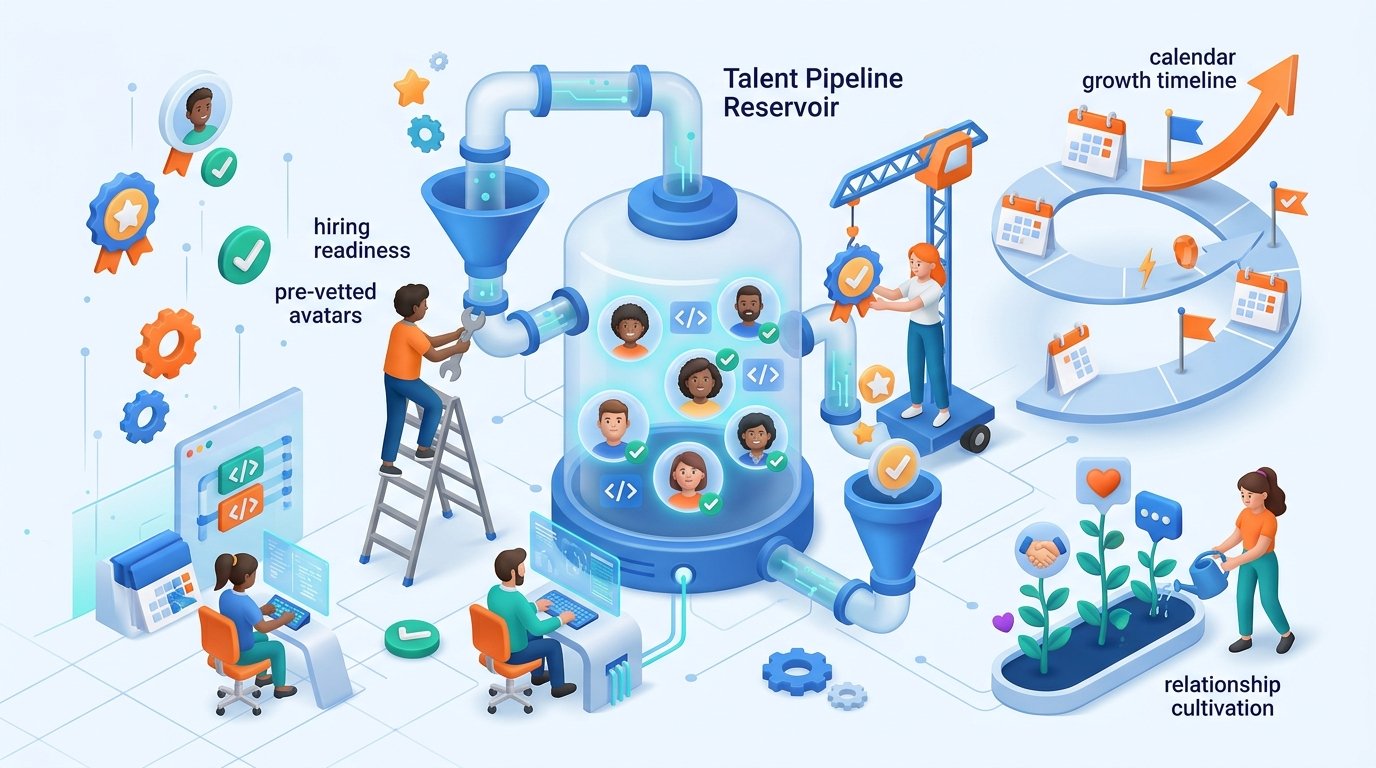
Technical hiring rarely works well when it starts only after a vacancy appears. Finding the right person takes time, particularly when the role calls for a specific mix of engineering experience, product knowledge, and communication skills. A technical talent pipeline helps you build relationships with potential candidates before the need becomes urgent.
It does not mean collecting hundreds of CVs and sending occasional generic messages. It means understanding the roles your business may need, identifying relevant people, and staying in touch in a useful and respectful way.
What Is a Technical Talent Pipeline?
A technical talent pipeline is an organised group of potential candidates who may be suitable for future roles. They might include software engineers, data specialists, cloud professionals, cybersecurity experts, product engineers, or technical leaders. Some may be actively looking for work; others may be happy in their current jobs but open to a conversation later.
A pipeline is different from a list of applicants for one vacancy. Applicants usually respond to a current opening, while a pipeline supports future hiring needs as they emerge. The aim is not to pressure people into changing jobs. It is to build enough understanding and trust that, when a relevant opportunity appears, both sides can have a more informed conversation.
Start With Your Likely Hiring Needs
Before searching LinkedIn or contacting candidates, speak with the people responsible for your product and delivery. Ask what the team is planning, which skills are becoming scarce internally, and where a resignation or new project would create the biggest gap.
- Roles you expect to hire for in the next six to twelve months.
- Skills that are difficult to find or take a long time to assess.
- Projects or client commitments that could increase hiring demand.
- Roles where a vacancy would create a serious delivery risk.
- The salary range, location, time-zone, and working arrangement likely to apply.
Treat these assumptions as a working plan, not a promise that every role will open. Review them regularly with hiring managers so the pipeline stays connected to business priorities.
Identify the Right Candidates, Not Just More Candidates
A large database can look impressive but still be difficult to use. A smaller group of relevant, well-understood candidates is often more valuable than a long spreadsheet filled with names and outdated details.
Look beyond job titles
Titles vary widely between companies. Review the work candidates have done, the systems they have supported, the scale of their responsibilities, and the problems they can explain clearly instead of relying on job titles alone.
Use more than one sourcing route
Professional networks, technical communities, referrals, industry events, previous applicants, and direct outreach can all help you discover talent. Use channels that fit the role and the professionals you want to reach. Keep outreach relevant rather than sending the same message to everyone.
Record useful, job-related information
For each contact, record demonstrated skills, roles that may interest them, preferred working arrangements, the last conversation, and any agreed follow-up. Keep records accurate, limit access to people who need them, respect privacy requirements, and honour requests to stop receiving messages.
Build Relationships Before You Have a Vacancy
This is where many talent pipelines lose momentum. A recruiter finds a promising engineer, sends a connection request, and then disappears until a job opens. From the candidate’s perspective, the relationship can feel purely transactional.
A better approach is to make contact with a clear reason. Mention a relevant project, a skill that genuinely matches your future hiring plans, or a shared professional interest. Be transparent if there is no current role and ask whether the person would be comfortable staying in touch.
Keep follow-ups occasional and useful. Share a relevant role when one becomes available, ask whether their career priorities have changed, or provide an update after a conversation. Avoid frequent messages just to keep a contact active. Respect for a candidate’s time is part of your employer reputation.
Make Candidate Experience Part of the Pipeline
A pipeline is also an early version of the candidate experience your company offers. If people receive confusing messages, wait weeks for a response, or are asked to repeat information they have already shared, they may lose interest before the formal process begins.
- Explain who you are and why you are contacting the candidate.
- Be honest about whether a role exists now or may arise later.
- Share realistic information about the work, team, and hiring process.
- Follow up when you say you will, even if there is no news.
- Keep interview feedback and candidate information confidential.
A positive experience does not require a complicated recruitment platform. It starts with clear communication and consistent follow-through.
Keep the Pipeline Organised and Current
Candidate information becomes less useful when nobody owns it. Assign responsibility for updating records, reviewing upcoming hiring needs, and removing duplicates. A simple applicant tracking system or secure, well-managed spreadsheet may be enough for a small team, provided it supports the way you work and meets data-handling obligations.
- Identified: potentially relevant, but not contacted.
- Contacted: outreach sent, awaiting a response.
- Connected: initial conversation completed.
- Future fit: relevant for a possible role, with permission to stay in touch.
- Ready to discuss: a suitable opening exists and the candidate has expressed interest.
- Inactive: no current fit, no response after reasonable follow-up, or the candidate has asked not to be contacted.
Use stages to support clear next steps, not to label people permanently. Candidates’ interests and circumstances change, so confirm availability and expectations when a real role comes up.
Measure Whether Your Pipeline Is Working
A talent pipeline should make hiring more prepared, not simply create more administrative work. Track a few measures that show whether the process is producing useful conversations and better shortlists.
- Response rate to relevant outreach.
- Number of candidates who meet agreed role criteria.
- Time from an approved vacancy to a qualified shortlist.
- How many pipeline candidates progress when a suitable role opens.
- Candidate feedback on communication and process clarity.
- Accuracy and freshness of candidate records.
Avoid treating message volume or database size as the main sign of success. A smaller number of well-matched candidates who are genuinely interested can be more useful than hundreds of contacts who do not fit the work.
When Should You Work With a Recruitment Partner?
Some startups can build and maintain a pipeline internally, especially when they hire for a small number of familiar roles. Others may lack the time, specialist sourcing skills, or technical assessment experience needed to keep the process moving. In those cases, a recruitment partner can help map the market, identify relevant candidates, and organise early conversations.
Before engaging a partner, clarify which parts of the pipeline they will manage, how candidate consent and records will be handled, how often you will receive updates, and how success will be measured. Your hiring managers should remain involved in defining role requirements and evaluating candidates.
Learn more about Recruiting Simple’s recruitment services and its approach to technical expertise. You can also visit the About Recruiting Simple page.
Frequently Asked Questions
How far in advance should a startup build a technical talent pipeline?
Start when your roadmap suggests a likely hiring need, especially for specialised roles that may take longer to source. Reviewing plans six to twelve months ahead can be useful, but the right horizon depends on your business and hiring market.
Is a talent pipeline the same as an applicant database?
Not quite. An applicant database mainly records people who have applied or participated in a hiring process. A talent pipeline is more proactive: it includes relevant potential candidates and tracks relationship-building for future roles.
How often should recruiters contact pipeline candidates?
There is no universal cadence. Contact people when you have a relevant update or an agreed reason to follow up, and avoid repetitive messages without value. Always respect candidate preferences and requests not to be contacted.
What information should be stored about potential candidates?
Keep only relevant, accurate information needed for legitimate recruitment purposes, such as professional skills, experience, role interests, contact history, and agreed follow-up. Restrict access, follow applicable privacy rules, and honour data-related requests.
Can a small startup manage a talent pipeline without recruitment software?
Yes. A simple, secure spreadsheet or lightweight system can work when the volume is manageable and someone owns updates. As hiring volume grows, dedicated software may help with collaboration, reminders, reporting, and data governance.
Conclusion
A technical talent pipeline will not remove every challenge from hiring, and it cannot guarantee that a candidate will be available when you need them. What it can do is reduce the pressure of starting from zero every time a role opens.
Start with the roles your business is likely to need, focus on people whose experience fits those needs, and build relationships through clear, respectful communication. Keep records current, measure the quality of conversations rather than the size of your database, and involve hiring managers before a vacancy becomes urgent.
When your team is ready to hire, that groundwork can help you move with greater clarity and give candidates a better experience from the first conversation.