
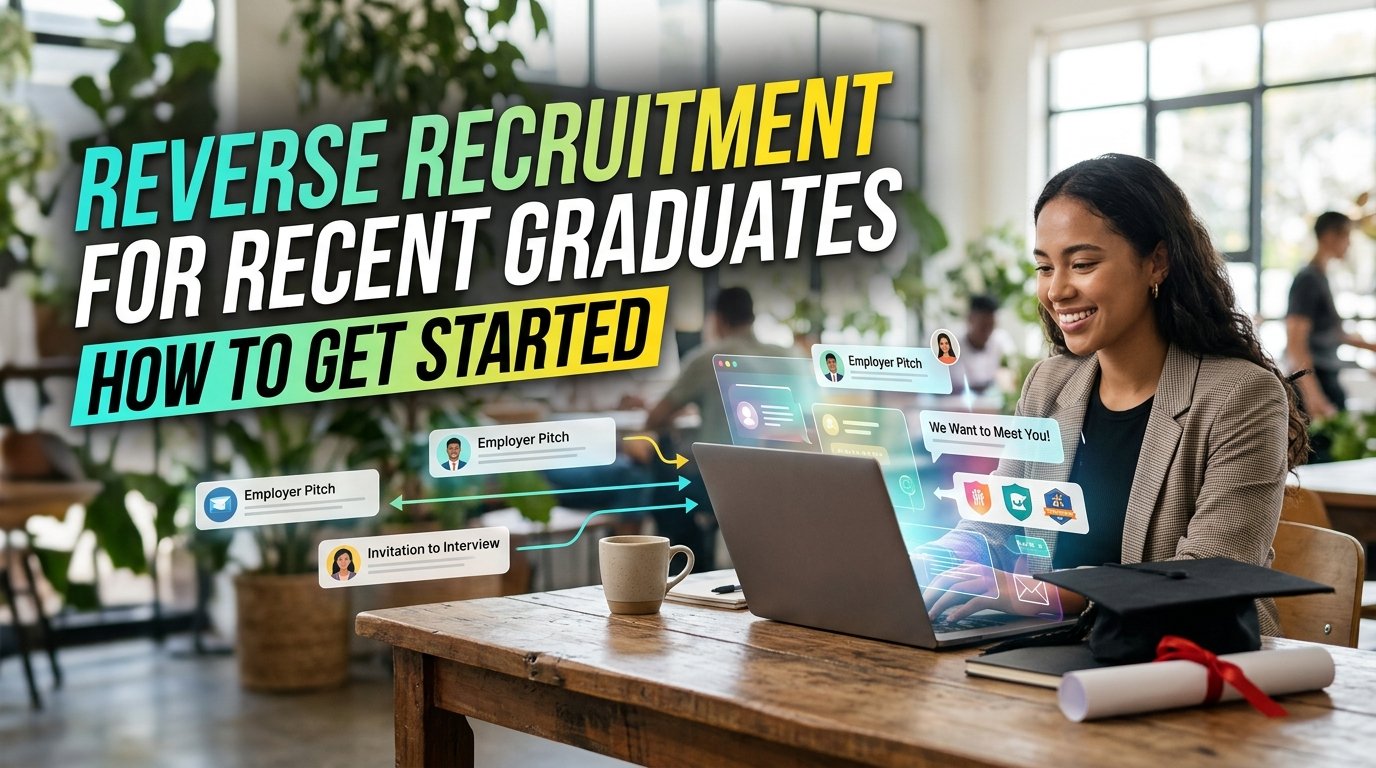
Finishing a degree, diploma or professional course is a significant achievement. Yet moving from education into employment can feel uncertain. Entry-level vacancies can attract many applicants, and job descriptions sometimes ask for experience that a recent graduate has not had the chance to gain.
The challenge is not necessarily a lack of ability. It is often knowing how to identify realistic opportunities, explain transferable skills and present evidence that you can contribute. A structured job search can make these tasks easier to manage.
Reverse recruitment for recent graduates offers one possible approach. Instead of waiting for employers or recruiters to find you, the process focuses on the candidate: understanding career goals, identifying suitable employers, improving application materials and approaching relevant opportunities strategically.
What Is Reverse Recruitment?
In a traditional recruitment model, an employer hires a recruiter to find candidates for a vacancy. In reverse recruitment, the job seeker is the client and receives support with their own search. Depending on the provider, this may include career direction, CV and LinkedIn improvements, employer research, targeted applications, networking support and interview preparation.
The exact service differs between providers. Before paying, ask what work will be completed, what remains your responsibility, how progress is reported and whether additional fees apply.
For an introduction, explore Recruiting Simple’s reverse recruitment service and consider whether it matches the support you need.
1. Start with a Clear Direction, Not Just Any Vacancy
When starting out, it can be tempting to apply for every role labelled graduate, junior or assistant. A high volume of applications may feel productive, but applications that do not match your interests or skills are unlikely to make a strong case.
Identify two or three role families that genuinely interest you. A business graduate might explore marketing coordination, sales support and operations. A computing graduate could compare junior development, IT support, QA testing and data-related positions.
Look at day-to-day responsibilities, not only job titles. Identify skills that appear repeatedly and note which ones you can demonstrate through coursework, projects, placements, volunteering or part-time work.
2. Turn Education into Evidence of Practical Skills
A lack of full-time employment does not mean you have no relevant experience. Employers need evidence that you can learn, solve problems, communicate and complete work responsibly. Show where you have practised those abilities.
- A university project where you researched a problem, analysed information or delivered a presentation.
- A group assignment where you coordinated tasks, resolved disagreements or met a deadline.
- An internship, placement or volunteering role where you supported a team or worked with customers.
- A personal project, portfolio or practical course exercise that demonstrates a job-related skill.
Explain what you did, which tools or methods you used and what the outcome was. Include measurable results only when accurate. Present academic work honestly as project experience rather than paid employment.
3. Build a Graduate CV Around the Role
A graduate CV should make relevant information easy to find. Depending on your background, include a short profile, education, relevant projects, experience, skills, certifications and volunteering. Put your strongest evidence near the top.
Avoid generic claims such as “hard-working team player” unless you support them with examples. Explain that you presented research findings, managed a project timeline or used particular software to complete an assignment.
Tailor the CV to each role by reflecting genuine requirements in your wording. Do not copy the advert or add skills you cannot demonstrate.
4. Make Your LinkedIn Profile Support Your Applications
Use a headline that explains the area you are pursuing and make the About section specific to your skills and interests. Add relevant projects, placements, certifications and portfolio links. You do not need to present yourself as an experienced specialist; make your potential and current capabilities easy to understand.
Connect thoughtfully with alumni, people in your target field and relevant professional communities. Personalise connection requests and avoid sending the same generic message to dozens of people.
5. Identify Employers That Offer a Realistic Starting Point
Look beyond large graduate schemes. Smaller organisations, local employers, specialist agencies, charities and growing businesses may also offer entry-level opportunities, placements or junior roles.
Create a target-employer list. Record what each organisation does, relevant teams, location or remote-work policy, entry-level roles and the official application channel. Check that a vacancy is current before applying.
Separate employers with advertised vacancies from organisations you may approach through networking or speculative enquiries. Be professional and concise when contacting a company without a suitable advertised role.
6. Use a Consistent Application Process
Create a tracker with the employer, role, vacancy link, application date, contact person, next step and outcome. Before applying, check that your CV and supporting statement address the essential criteria. Answer every question accurately and proofread the final documents.
If a reverse recruitment provider manages parts of the process, agree who approves applications, how your personal information is handled and how you will be kept informed.
7. Prepare for Interviews Before You Receive an Invitation
Prepare short stories that demonstrate communication, teamwork, problem-solving, organisation, adaptability and learning. Use the STAR structure: Situation, Task, Action and Result.
Practise explaining why you chose your subject, what you learned from a significant project and why you are interested in the role. Employers do not expect a recent graduate to know everything. They do expect curiosity, honesty and a willingness to learn.
Prepare questions about training, supervision, team responsibilities and what success looks like during the first few months.
8. Be Careful with Paid Career Support
Graduate job seekers may have a limited budget, so compare services carefully. Ask for written deliverables, agreement length, payment terms, cancellation conditions and how progress is measured. Find out whether CV writing, applications and interview coaching are included or charged separately.
Be cautious of anyone who guarantees a job, promises a specific salary without understanding your circumstances or pressures you to pay immediately. No legitimate service can control an employer’s final hiring decision.
You can also use university careers teams, alumni networks, public employment services and free professional resources alongside any paid support.
9. Track Progress and Adjust Your Strategy
Review your search every few weeks. Look at suitable roles identified, applications submitted, employer responses, screening calls and interviews. These measures help identify where the process needs attention.
If you receive few responses, revisit role targeting and your CV. If you reach interviews but do not progress, practise answering questions and explaining your evidence. If employers repeatedly request a skill you lack, consider a short course or practical project.
Do not judge progress only by applications sent. A smaller number of well-matched applications can be more useful than a large volume of generic submissions.
10. Keep Your Expectations Ambitious but Realistic
Your first role does not have to define your entire career. Look for a reasonable opportunity to learn, contribute and build experience. Consider supervision, training, responsibilities and progression as well as salary and job title.
You may start in a role adjacent to your long-term goal. An aspiring data analyst, for example, might gain useful experience in reporting or operations before moving into a specialist position. Understand how the role could help you develop.
Stay open to learning, but do not ignore warning signs such as unclear duties, unpaid work presented as a guaranteed route to employment or inappropriate requests for personal or financial information.
How Recruiting Simple Can Fit into a Graduate Job Search
A candidate-focused recruitment service may be useful if you need structure, help identifying suitable employers or support presenting your experience. Compare the service scope with the tasks you actually need help completing.
Read more about how reverse recruitment works and review Recruiting Simple’s reverse recruitment approach.
If you are considering a different career direction later, the guide to reverse recruitment for career changers may also help explain how targeted support can be applied.
Whichever route you choose, remain involved. Understand where and how your CV is shared, approve applications submitted in your name and take part in interviews and employer conversations.
Conclusion: Build Your First Career Move with a Clear Plan
Recent graduates do not need to pretend they have years of experience. They need to show what they have learned, how they have applied it and why they are ready for the next step. A focused search, a well-evidenced CV and thoughtful employer research can help make that case.
Reverse recruitment may provide additional structure and practical support, but it is not a shortcut or a job guarantee. Choose a service carefully, stay involved in decisions and keep building evidence of your skills as you apply.
Your first opportunity is a starting point. With a clear direction and a consistent approach, you can turn your education, projects and early experience into a credible foundation for your career.
Frequently Asked Questions
1. Is reverse recruitment suitable for recent graduates?
It can suit graduates who want structured support with career direction, employer research, applications or interview preparation. Check the provider’s experience with entry-level candidates and confirm exactly what is included.
2. Can I use reverse recruitment if I have no work experience?
Yes, but be ready to demonstrate relevant skills through academic projects, placements, volunteering, part-time work or personal projects. A service cannot replace credible evidence.
3. What should a graduate include on a CV?
Include education, relevant projects, placements, employment, volunteering, practical skills and certifications. Prioritise information that relates to your target roles.
4. Does reverse recruitment guarantee a graduate job?
No. It may improve and organise parts of the job search, but employers make their own decisions. Be cautious of providers that guarantee employment.
5. Should graduates apply for jobs asking for one or two years of experience?
If you meet most essential criteria and can demonstrate comparable skills through projects, placements or other experience, applying may be reasonable. Read each requirement carefully.
6. How can I make my first job application stronger?
Tailor your CV, give specific examples, follow the application instructions and proofread everything. Research the employer and prepare to explain why the role fits your interests and abilities.