
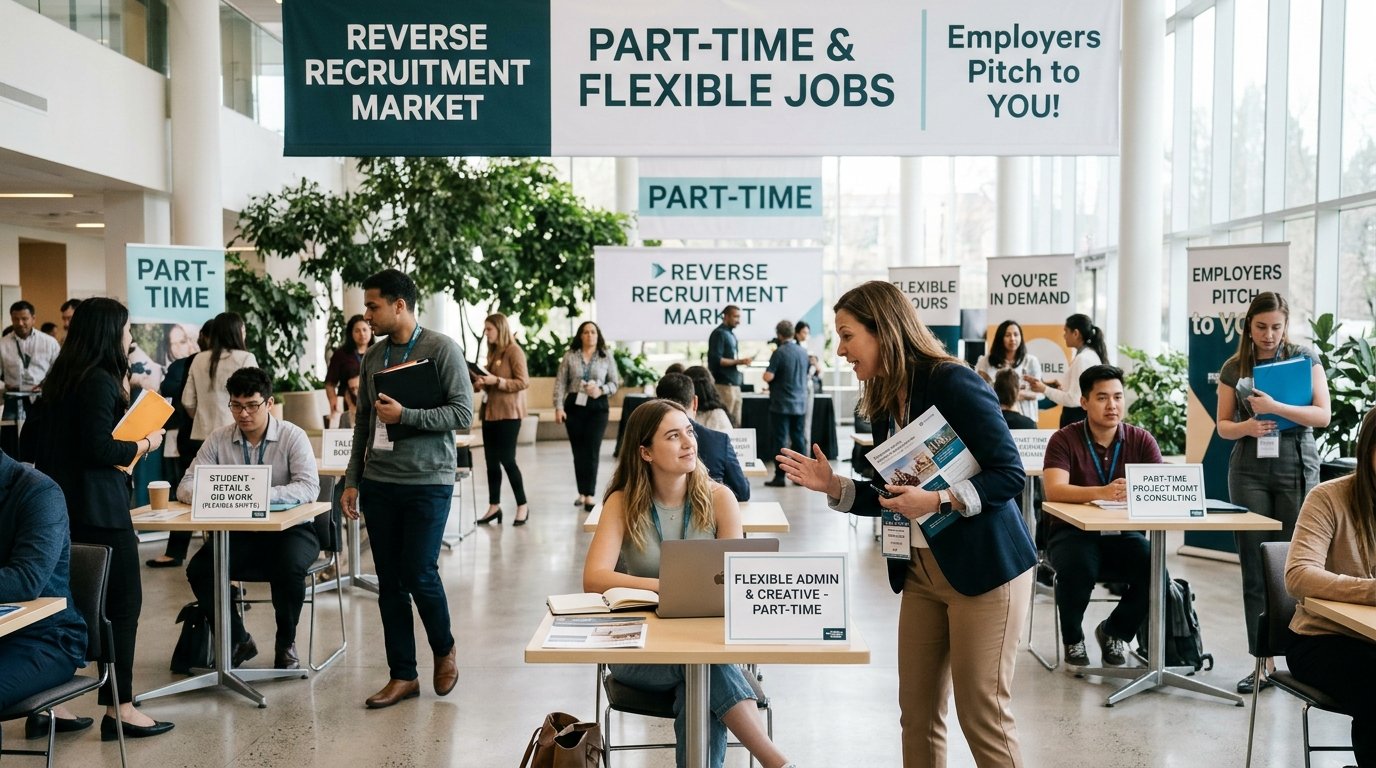
Not everyone wants to work a traditional nine-to-five schedule. Some professionals need time for family responsibilities, further education, personal projects or other commitments. Others simply perform better when they have greater control over their working hours.
Part-time and flexible employment can offer a practical way to balance professional goals with everyday responsibilities. However, finding a suitable position can be challenging. Many vacancies have fixed schedules, and employers do not always advertise whether flexible arrangements are possible.
This is where reverse recruitment for part-time jobs can help. Instead of relying only on advertised vacancies, candidates can take a more targeted approach to identifying employers, presenting their skills and exploring suitable working arrangements.
In this guide, we explain how reverse recruitment can support your search for part-time and flexible employment, what to consider before approaching employers and how to improve your chances of finding a role that fits your needs.
What Are Part-Time and Flexible Jobs?
Part-time and flexible jobs are related, but they do not mean exactly the same thing.
A part-time job generally involves fewer working hours than a comparable full-time position. A flexible job offers some choice over when, where or how those hours are completed.
Common working arrangements include:
Part-Time Employment
Employees work fewer hours than a standard full-time schedule. These hours may be spread across several days or concentrated into specific shifts.
Flexible Working Hours
Employees have some flexibility over their start and finish times, provided they meet the organisation’s requirements.
Hybrid Working
Employees divide their working time between an office and another location, often their home.
Remote Working
Employees perform their responsibilities away from the employer’s physical workplace. Some remote roles are full-time, while others offer part-time arrangements.
Job Sharing
Two employees share the responsibilities and working hours of one full-time position.
Understanding these arrangements helps you identify the type of opportunity that genuinely suits your circumstances.
Why Can Finding Flexible Employment Be Difficult?
Searching for flexible work is not always as simple as adding the word “part-time” to a job search.
Some employers advertise flexible positions clearly, while others may consider adjustments depending on the role, workload and business requirements.
Here are some common challenges.
1. Limited Advertised Vacancies
Some industries have fewer part-time positions than full-time roles. This can make it difficult to find vacancies that match your skills and preferred schedule.
2. Unclear Working Arrangements
A vacancy may mention flexibility without explaining whether this means remote working, adjustable hours or occasional schedule changes.
Candidates need to clarify the actual arrangement before progressing too far through the recruitment process.
3. Competition for Suitable Roles
Flexible positions can attract applicants who have similar preferences. A strong application needs to demonstrate why your skills and availability are a good match.
4. Employers May Have Fixed Staffing Requirements
Some roles require specific hours because of customer demand, team coordination or operational responsibilities.
A flexible arrangement may not be practical for every position, so it is important to target employers where your preferred schedule could work.
How Reverse Recruitment Helps You Find Flexible Jobs
Traditional recruitment usually starts with an advertised vacancy. Candidates search job boards, submit applications and wait for employers to respond.
Reverse recruitment takes a more candidate-focused approach. It starts by understanding your professional background, career objectives and employment preferences before identifying relevant opportunities.
The process can support your search in several ways.
1. Defining Your Ideal Working Arrangement
Before searching for opportunities, clarify what flexibility means to you.
For example, consider whether you need:
- A fixed part-time schedule.
- Flexible start and finish times.
- Remote or hybrid working.
- A compressed working week.
- A job-sharing arrangement.
- A specific number of working days.
Being clear about your requirements makes it easier to identify realistic opportunities and communicate your expectations to employers.
2. Identifying Employers That Match Your Needs
Not every company offers the same working arrangements.
A targeted employer search can identify organisations whose operating models, industry and role requirements may be compatible with your preferred schedule.
For example, a digital marketing professional might explore agencies, eCommerce companies, consultancy businesses and organisations with distributed teams.
3. Positioning Your Skills Effectively
Employers need to understand what you can contribute, not just how many hours you want to work.
Your CV and LinkedIn profile should highlight relevant experience, professional strengths and achievements. They should also make your target roles clear.
Professional reverse recruitment support can help candidates organise their job search and present their experience to suitable employers.
4. Exploring Opportunities Beyond Job Advertisements
Some employers may be open to discussing flexible arrangements even when a vacancy does not explicitly mention them.
Targeted outreach can help you introduce your experience and ask whether a suitable working arrangement could be considered.
This approach should be professional and personalised. Explain the value you can bring before discussing the schedule you need.
5. Preparing for Employer Discussions
Employers may ask how you will manage deadlines, communicate with colleagues and remain available during important working hours.
Prepare practical examples that demonstrate your reliability and ability to deliver results.
If you are considering a broader career move, our complete reverse recruitment guide explains how the candidate-focused process works.
Which Professionals Can Benefit from Flexible Job Opportunities?
Flexible employment can suit professionals from many different backgrounds. The most suitable opportunities depend on the nature of the work and the employer’s requirements.
| Professional Background | Potential Flexible Roles | Digital marketing. |
|---|---|
| SEO specialist, content marketer and social media manager. | |
| Technology. | Software developer, technical support specialist and web developer. |
| Administration. | Virtual assistant, administrative coordinator and data administrator. |
| Finance. | Bookkeeper, accounts assistant and financial administrator. |
| Design. | Graphic designer, UX/UI designer and creative specialist. |
| Writing. | Copywriter, content writer and editor. |
| Customer service. | Customer support adviser and client service specialist. |
Some roles can be completed remotely, while others require attendance at a workplace or specific working hours.
If your experience is in technology, you may also find our guide to reverse recruiting for executives and technology professionals useful when considering specialist opportunities.
How to Make Your Application Stronger
Finding a suitable vacancy is only one part of the process. Your application must show employers that you can deliver the required work within the proposed arrangement.
Highlight Relevant Achievements
Use examples that demonstrate your ability to manage responsibilities, meet deadlines and produce quality work.
Where possible, include measurable results supported by accurate information.
Explain Your Availability Clearly
If you can work specific days or hours, communicate this clearly. Avoid vague statements such as “available when needed” if you have fixed commitments.
Demonstrate Independent Working Skills
Flexible and remote roles may require employees to manage tasks without constant supervision.
Highlight experience with planning, communication, collaboration tools and independent problem-solving.
Keep Your Professional Profiles Consistent
Your CV and LinkedIn profile should communicate the same professional direction. Make sure your headline, summary and experience support the roles you are targeting.
You can find more information about the organisation and its approach on the RecruitingSimple About Us page.
Questions to Ask Before Accepting a Flexible Job
A position may sound flexible in the advertisement, but you should understand the actual arrangement before accepting an offer.
Consider asking:
- What are the expected weekly working hours?
- Are the working hours fixed or adjustable?
- Is remote or hybrid working available?
- Are there mandatory office days?
- How are meetings and team collaboration managed?
- Is overtime expected, and how is it handled?
- Can the working arrangement change in the future?
Also review the contract carefully. Confirm salary, benefits, leave entitlement, responsibilities and any conditions attached to the flexible arrangement.
Common Mistakes to Avoid When Searching for Flexible Work
Applying Without Understanding the Role
A remote position is not automatically a flexible-hours position. Check the actual schedule and availability requirements.
Focusing Only on Working Hours
A suitable role should also match your skills, responsibilities, salary expectations and career goals.
Making Flexibility the Only Selling Point
Employers still need to understand your professional value. Lead with your experience and explain how you can meet their requirements.
Limiting Your Search to Job Boards
Job boards are useful, but they are not the only way to identify employers. Researching organisations and building relevant professional connections can reveal additional possibilities.
Accepting Unclear Working Conditions
Always clarify the agreed schedule, availability expectations and responsibilities before signing an employment contract.
How RecruitingSimple Can Support Your Flexible Job Search
Finding a role that matches both your professional experience and preferred working arrangement requires a focused approach.
RecruitingSimple provides reverse recruitment services designed to help candidates approach their job search more strategically.
Depending on your requirements, support can include:
- Reviewing your professional experience and career objectives.
- Identifying suitable roles and potential employers.
- Improving your CV and LinkedIn positioning.
- Researching relevant organisations.
- Supporting targeted employer outreach.
- Preparing for interviews and employment discussions.
- Helping you assess opportunities against your career priorities.
The service is not a guarantee of employment or a promise that every employer will offer flexible hours. Its purpose is to help candidates approach suitable opportunities with a clearer strategy.
For more recruitment advice and career guidance, visit the RecruitingSimple blog, where you can explore additional resources.
Final Thoughts
Finding part-time or flexible employment does not mean compromising on your professional ambitions. The right opportunity can allow you to continue developing your skills while making room for other important responsibilities.
However, a successful search requires more than applying for every vacancy that mentions flexibility. You need to identify suitable employers, communicate your professional value and understand the working arrangements before making a decision.
Reverse recruitment offers a structured, candidate-focused way to explore these opportunities. With clear goals, effective positioning and targeted employer research, you can take a more confident approach to finding work that fits your life.
Frequently Asked Questions
1. Can reverse recruitment help me find part-time jobs?
Yes. Reverse recruitment can help you identify relevant employers, present your experience and explore suitable part-time opportunities. The availability of roles depends on your skills, industry and target employers.
2. Can I find flexible jobs that are not advertised?
You may be able to identify employers who are open to discussing flexible arrangements through targeted research and professional outreach. However, an employer is not required to create a flexible position.
3. Are remote jobs always flexible?
No. Some remote positions require employees to work fixed hours or remain available during specific business hours. Always confirm the schedule before applying or accepting an offer.
4. How should I explain my need for flexible working?
Explain your preferred arrangement clearly and professionally. Focus on the hours you can commit to and how you will meet the responsibilities and expectations of the role.
5. Which industries offer part-time and flexible employment?
Technology, digital marketing, administration, finance, design, writing and customer support can include flexible opportunities. Availability varies by employer, role and location.
6. Does reverse recruitment guarantee a flexible job?
No. Reverse recruitment can support employer research, professional positioning and targeted outreach, but it cannot guarantee an interview, job offer or particular working arrangement.