
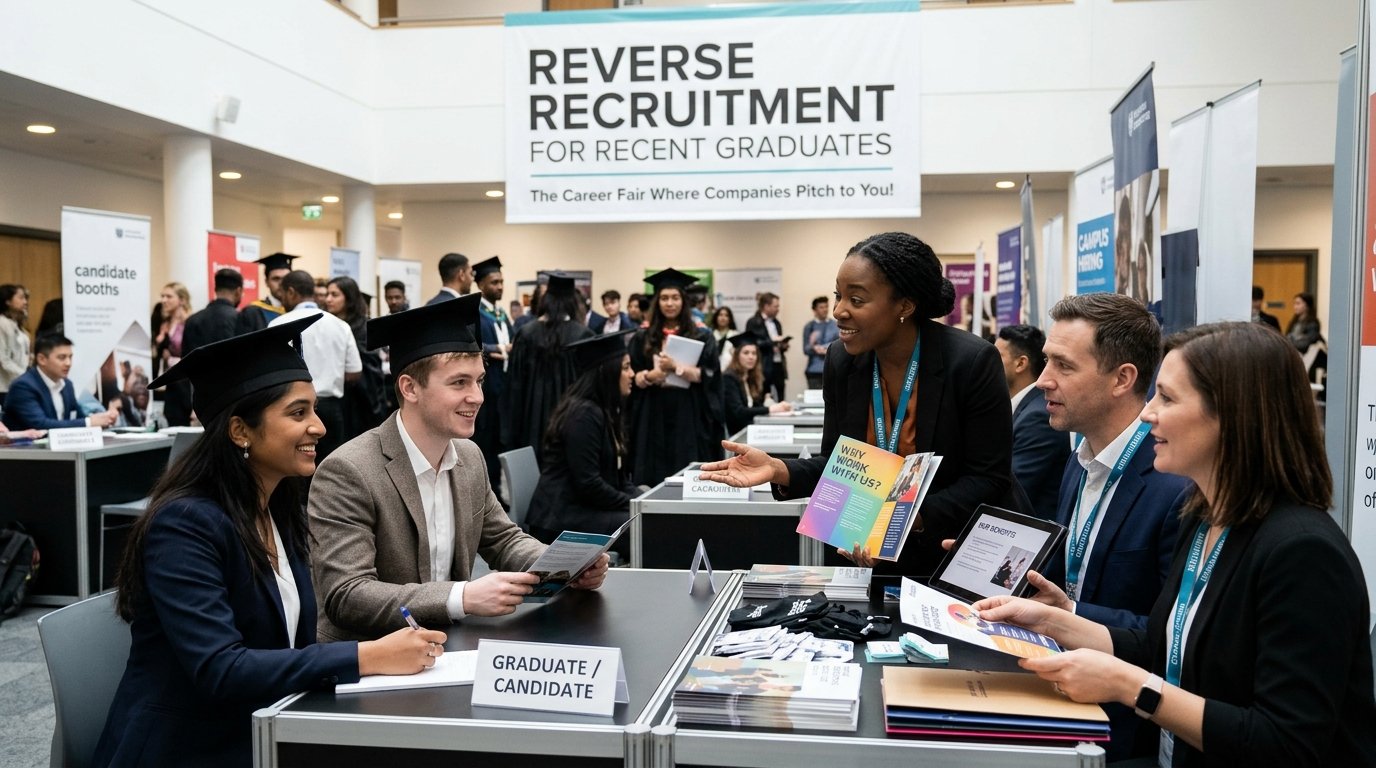
Graduating from university is an important achievement, but finding your first professional job can be more challenging than expected. Many recent graduates leave education with qualifications, academic knowledge and career ambitions but limited experience of working in a professional environment.
The job market can also be competitive. Employers often look for candidates who can demonstrate practical skills, communication abilities and an understanding of workplace expectations. For graduates who have never held a full-time professional position, meeting these expectations can feel difficult.
Traditional job searching usually involves browsing vacancies, submitting CVs and waiting for employers to respond. However, this approach does not always help graduates understand which opportunities are suitable or how to present their abilities effectively.
This is where reverse recruitment for recent graduates can provide a more structured approach. Instead of managing the entire process independently, graduates can receive support with career planning, CV preparation, employer research, applications and interview preparation.
In this guide, we explain how reverse recruitment works and how graduates can use it to approach employers and build their professional careers.
What Is Reverse Recruitment for Recent Graduates?
Reverse recruitment is a candidate-focused approach to job searching. It helps individuals identify suitable employers, improve their professional profiles and manage applications more strategically.
For recent graduates, the process focuses on turning academic achievements, transferable skills, internships and practical projects into a professional profile that employers can understand.
Support may include:
- Identifying suitable entry-level roles.
- Reviewing educational qualifications and transferable skills.
- Creating a professional CV.
- Improving LinkedIn profiles.
- Researching relevant employers.
- Preparing targeted applications.
- Supporting professional networking and outreach.
- Preparing candidates for interviews.
Unlike traditional recruitment, which generally focuses on employers filling vacancies, reverse recruitment places greater attention on helping candidates manage their career search.
You can explore the RecruitingSimple reverse recruitment service to understand how candidate-focused support can help organise the job search process.
Why Graduates Struggle to Find Their First Professional Job
Moving from education into employment involves several changes. Graduates must learn how to communicate their abilities in a way that meets employer expectations.
Limited Professional Experience
One of the most common challenges is the lack of full-time work experience.
Employers may request previous experience even for entry-level positions. This can make graduates feel that they need experience to get a job but need a job to gain experience.
However, professional experience is not limited to permanent employment. Internships, university projects, volunteering, freelance assignments and relevant extracurricular activities can demonstrate useful abilities.
Difficulty Identifying Suitable Positions
Graduates may apply for positions based only on job titles without checking the responsibilities and requirements.
For example, a business graduate might apply for marketing, administration, sales and finance roles without considering which positions best match their interests and skills.
A focused job search can help candidates prioritise suitable opportunities instead of submitting applications without a clear direction.
Competition for Entry-Level Opportunities
Graduate programmes and junior positions can attract applications from candidates with similar qualifications.
Employers may distinguish between applicants through practical experience, communication skills, technical knowledge and evidence of initiative.
Graduates therefore need to explain what makes them suitable beyond simply listing their degree.
Uncertainty About Career Direction
Some graduates complete their studies without knowing which professional path to follow.
They may have studied a broad subject or discovered new interests during university. Career planning can help them explore suitable industries and understand the skills required for different positions.
How Reverse Recruitment Supports Graduate Job Seekers
A structured recruitment strategy can help recent graduates move from general job searching towards more focused career development.
Identifying Suitable Career Opportunities
The process begins by understanding the graduate’s educational background, interests, skills and employment preferences.
This information can be used to identify relevant entry-level positions and employers.
For example, a computer science graduate may explore junior software development, technical support, quality assurance or data-related positions depending on their skills and interests.
Improving CV Presentation
Graduates often struggle to create a CV because they believe they have little to include.
However, a well-organised CV can highlight academic projects, internships, certifications, technical skills and achievements.
The aim is to show employers how the candidate’s background relates to the responsibilities of the position.
Researching Potential Employers
Rather than relying entirely on job boards, candidates can research organisations that hire graduates and entry-level professionals.
This includes checking company career pages, graduate programmes, professional networks and industry opportunities.
Preparing Targeted Applications
Every application should demonstrate why the graduate is suitable for the particular position.
A targeted approach helps candidates connect their education and practical abilities with the employer’s requirements.
For a broader understanding of the process, read our complete guide to reverse recruitment.
Identifying Entry-Level Roles That Match Your Degree
Your degree can provide a starting point for your job search, but it does not always determine your entire career.
Graduates should consider how their academic knowledge connects with practical business requirements.
Explore Different Roles Within Your Industry
A computer science graduate might consider software development, IT support, data analysis or quality assurance.
A business graduate could explore sales, operations, marketing, administration or business development.
An English graduate may find opportunities in content writing, communications, editing, customer support or digital marketing.
These are examples rather than fixed career paths. The right choice depends on individual skills, interests and employer requirements.
Review Job Descriptions Carefully
Before applying, identify the skills and qualifications requested by employers.
Pay attention to:
- Required educational qualifications.
- Technical or software skills.
- Communication requirements.
- Experience expectations.
- Responsibilities of the position.
- Opportunities for training and development.
This helps you understand whether a vacancy is genuinely suitable.
Consider Graduate Training Programmes
Some organisations offer structured graduate programmes that combine practical work with professional development.
These programmes can help graduates gain industry experience, learn workplace processes and develop specialist knowledge.
Check eligibility criteria and application deadlines carefully because they vary between employers.
Creating a CV With Limited Professional Experience
A graduate CV should focus on relevant abilities rather than trying to imitate the CV of an experienced professional.
Start With a Clear Professional Summary
Write a short introduction explaining your qualification, relevant skills and career interests.
For example:
“Recent Business Management graduate with academic experience in market research, business communication and project coordination. Interested in developing a career in business operations and supporting effective organisational processes.”
Keep the summary accurate and relevant to the position.
Highlight Your Education
Include your degree, institution, graduation year and relevant academic achievements.
You can also mention subjects or coursework that directly relate to the job.
Include Practical Skills
List skills that you can genuinely demonstrate.
Depending on your background, these may include:
- Microsoft Excel and reporting.
- Data analysis.
- Programming languages.
- Research and presentation.
- Content creation.
- Customer communication.
- Project coordination.
Avoid listing tools or skills simply because they appear in job advertisements.
Include Relevant Projects
Academic assignments and practical projects can demonstrate your ability to solve problems and complete tasks.
Explain the objective, your contribution and the result where possible.
Using Internships, Projects and Academic Work as Experience
Professional experience can take different forms. Graduates should not overlook valuable activities simply because they were not permanent jobs.
University Projects
A project involving research, analysis, planning or technical implementation can demonstrate practical knowledge.
Explain what you worked on, which tools you used and what you achieved.
Internships
Internships provide exposure to workplace responsibilities and professional communication.
Include your responsibilities, contributions and skills developed during the placement.
Freelance Assignments
Freelance work can demonstrate initiative, client communication and the ability to deliver work independently.
If you completed genuine projects for clients, describe the work accurately.
Volunteering
Volunteering can help demonstrate teamwork, organisation, leadership and community involvement.
Choose examples that are relevant to the type of position you want.
Building a LinkedIn Profile That Attracts Employers
LinkedIn provides graduates with an opportunity to establish their professional presence before gaining extensive employment experience.
A complete profile can help recruiters understand your background and discover relevant skills.
Write a Relevant Headline
Avoid using only “Fresh Graduate” as your headline.
Instead, describe your qualification and professional interests.
For example:
“Computer Science Graduate | Python | Web Development | Interested in Junior Software Engineering Opportunities.”
Improve Your About Section
Use this section to introduce your educational background, technical abilities, projects and career interests.
Write naturally and avoid generic statements that do not explain what you can offer.
Add Projects and Certifications
Include relevant academic projects, training programmes and certifications.
Where possible, provide links to portfolios, GitHub repositories or other professional work.
Connect With Industry Professionals
Build relevant connections with recruiters, alumni, hiring managers and professionals in your chosen industry.
Personalised connection requests can help start meaningful professional conversations.
You can also explore the RecruitingSimple blog for additional career and recruitment guidance.
Preparing for Your First Professional Interview
Your first professional interview may feel unfamiliar, particularly if most of your experience comes from academic environments.
Preparation can help you communicate more confidently.
Research the Employer
Understand the organisation’s services, products, customers and industry.
This allows you to explain why you are interested in the company rather than giving generic answers.
Prepare Examples From Your Experience
You can use examples from university projects, internships, volunteering and freelance work.
For instance, if an interviewer asks about teamwork, explain a genuine situation in which you worked with others to complete a project.
Practise Common Interview Questions
Prepare answers to questions such as:
- Tell us about yourself.
- Why did you choose this career?
- What are your strongest professional skills?
- Describe a challenge you faced during a project.
- How do you manage deadlines?
- What would you like to learn in your first role?
Use real examples rather than memorised answers.
Ask Relevant Questions
Prepare questions about training, responsibilities, team structure and performance expectations.
This demonstrates interest and helps you decide whether the position supports your career goals.
Common Graduate Job Search Mistakes to Avoid
Some mistakes can make it harder for graduates to secure their first professional opportunity.
Applying Without Understanding the Role
Do not apply simply because a position includes an attractive job title.
Review the responsibilities and determine whether your skills match the requirements.
Sending the Same CV Everywhere
A generic CV may not communicate your suitability for different positions.
Make relevant adjustments to your summary, skills and project descriptions for each application.
Ignoring Practical Experience
Do not leave internships, academic projects, freelance work or volunteering out of your CV when they demonstrate relevant abilities.
Neglecting LinkedIn
An incomplete professional profile may make it harder for recruiters to understand your experience.
Keep your education, projects, skills and career interests updated.
Expecting Immediate Results
Graduate recruitment can take time. Applications may involve multiple interview stages and assessments.
Maintain a consistent approach and review your strategy when applications are not producing results.
How to Choose a Graduate Reverse Recruitment Service
Not every recruitment service provides the same level of support. Recent graduates should understand what they are paying for before choosing a provider.
Check the Services Included
Look for clear information about career planning, CV development, LinkedIn optimisation, employer research and interview preparation.
Understand the Working Process
Ask how the provider assesses your background, identifies relevant opportunities and supports your applications.
Look for Transparent Pricing
Understand the fees, payment terms and services included before making a decision.
Avoid Guaranteed Job Promises
No recruitment provider can guarantee that an employer will hire you.
A credible service should explain its approach, responsibilities and limitations honestly.
You can learn more about the organisation through the RecruitingSimple About Us page.
FAQs About Reverse Recruitment for Recent Graduates
1. What is reverse recruitment for recent graduates?
Reverse recruitment is a candidate-focused job search approach that helps graduates identify suitable employers, improve their professional profiles and manage applications more strategically.
2. Can reverse recruitment help graduates without work experience?
Yes. Graduates can receive support with presenting academic projects, internships, transferable skills and certifications. However, employers will still assess candidates against the requirements of each position.
3. How can a fresh graduate get their first professional job?
Start by identifying suitable entry-level positions, preparing a relevant CV, building a professional LinkedIn profile and applying to employers whose requirements match your skills.
4. Should fresh graduates include university projects on their CV?
Yes. Relevant university projects can demonstrate practical knowledge, research, teamwork and problem-solving abilities, particularly when candidates have limited professional experience.
5. Is reverse recruitment different from traditional recruitment?
Yes. Traditional recruitment generally focuses on helping employers fill vacancies, while reverse recruitment focuses on supporting candidates throughout their job search.
6. Can reverse recruitment help graduates find remote jobs?
It can support graduates who want to explore remote opportunities by helping them identify suitable employers and prepare applications. Eligibility depends on the employer, role and relevant employment arrangements.
7. Does reverse recruitment guarantee a job after graduation?
No. Reverse recruitment can provide structured support, but it cannot guarantee interviews, job offers or employment. Hiring decisions remain with employers.
Conclusion
Getting your first professional job is an important step, but the process can be challenging when you have limited employment experience.
Your degree, academic projects, internships, technical skills and personal achievements can all contribute to a strong professional profile. The key is understanding how to present these strengths and connect them with suitable opportunities.
Reverse recruitment for recent graduates provides a structured approach to career planning, employer research, CV improvement and interview preparation.
Rather than applying randomly and waiting for responses, graduates can take a more focused approach to finding employers that match their abilities and ambitions.
If you are preparing to enter the professional world, explore RecruitingSimple’s reverse recruitment services to learn more about candidate-focused job search support.